

By Blake Schumacher
Kids these days receive an underserved bad reputation. I think every generation has been guilty of looking at the next one and wondering aloud, “What has happened to today’s youth?” There are countless debates around the world about kids addicted to their phones, social media, and never being able to spend a moment without their digital devices.
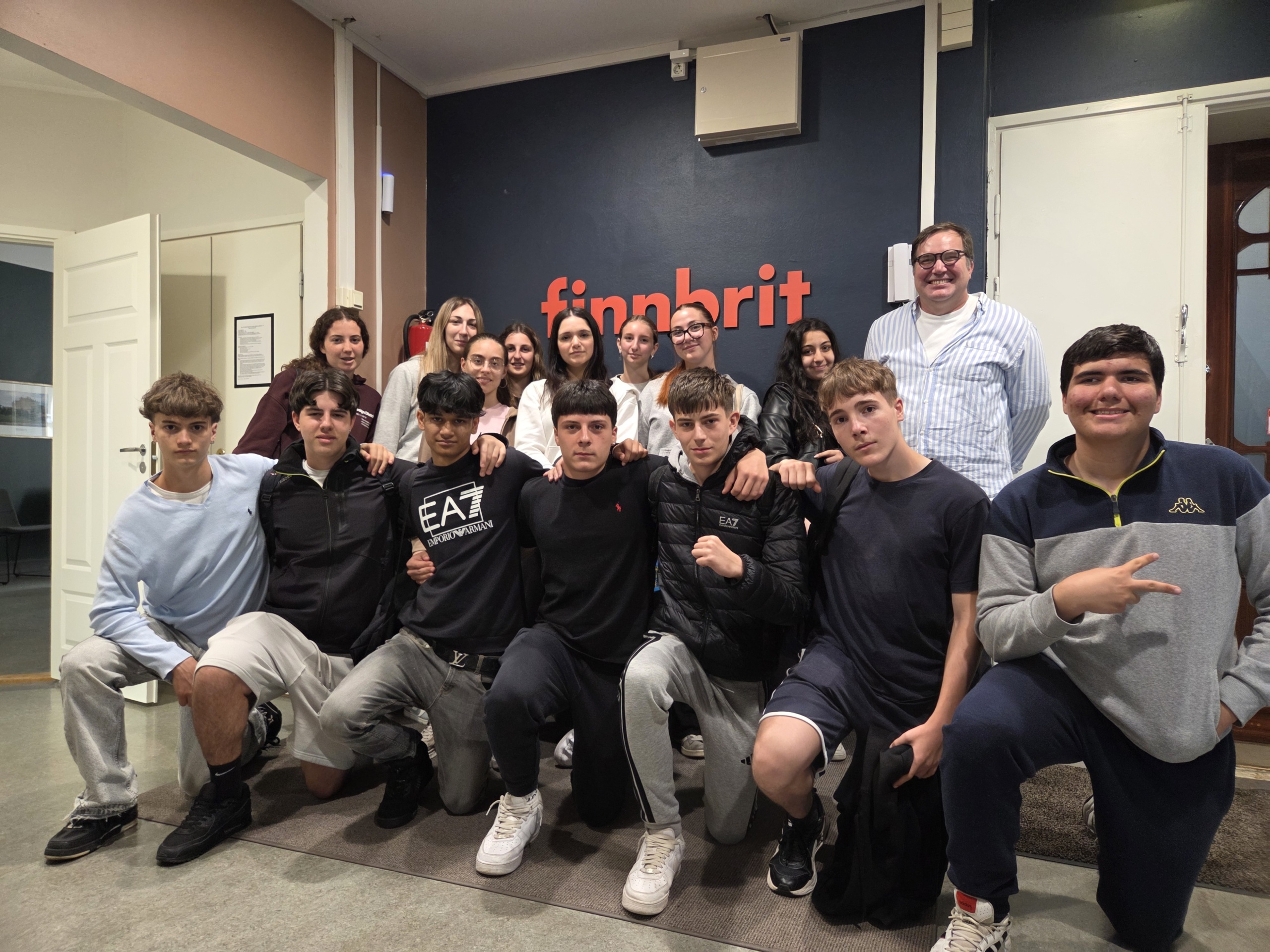
Recently at Finnbrit, I taught a group of Italian students studying English for about two weeks. I prepared myself for potential, “generational,” expectations. I imagined arguments about phones, difficulty keeping their attention, and the usual challenges that come with teaching young people. As with almost all biases, I was completely wrong with my preconceived notions.
These students were extremely polite, engaged, expressive, and surprisingly reflective. I thought all these kids were raised well. Every morning they greeted me. They asked if they could use the restroom and so many other polite gestures that probably seemed commonplace in my own American childhood that seem foreign to me now.
During their stay, we reviewed their English writing skills, played language games to enhance their vocabulary, laughed, and explored different ways of communicating. What surprised me most was not their English ability, but their willingness to express opinions. They were not afraid to disagree, question ideas, or challenge assumptions.
They came to realize that adjectives can sway the tone of a discussion. For example, describing an idea as “naive” creates a very different reaction than calling it, “idealistic.” Calling someone, “negative” creates a different conversation than saying it is, “cynical.” We explored these concepts and they continually asked each other, “Why?” not just as a tactic to justify their opinions, but to activate more descriptive language.
As mentioned earlier, I believe that every generation criticizes the one that follows it. I remember my elders criticizing my generation and probably still do. They questioned my generation’s work ethic, gratitude, priorities, and general selfishness. Their parents probably had similar complaints about them. The common overall theme is discounting the younger generation’s views due to their lack of experience and general naiveté.
When working with these students I failed to see any naiveté. These students were grounded, collaborative, and emotionally aware. They were also realistic about the world around them.
One thing that stood out was their writing about the future. Their essays were not filled with the same optimism I remember having when I was their age. I often grew up with the idea that the world was full of possibilities. I took the “American dream,” mantra seriously. I still believe if you work hard enough, the world will be your oyster. Within that belief, there is an idea that adventure is waiting, which is probably why I moved to Finland in my early twenties.
These students saw the world differently. They wrote about uncertainty, changing job markets, inequality, and how the influence of family connections and social structures will trump academic merit and hard work. These kids seemed hyperaware that opportunities are not always distributed equally, and that institutions can and often do protect the status quo. There was a melancholy feeling that the act of fighting against those institutions was an act of futility. It was difficult to tell whether it was me seeing the world through their eyes, a reality, or just a communal commentary to our devices’ collective newsfeeds.
That being said, the students could see insights maybe we take for granted. On our Friday outing we went to the Ateneum museum to expose them to Finnish culture. One student recognized something in Finnish culture I never realized by a simple statement. She lamented, “Even these old Finnish paintings seem to see the struggle between rich and poor.” Most teenagers would see the museum as boring. Not these kids, they saw the importance and love of nature throughout Finnish history. Even more exciting, they seem to understand the sometimes-forgotten class struggle that helped form this country and bore the pride of developing a country that puts a premium on equity and equality. A value that is oftentimes taken for granted.
During our time together, part of me wanted to tell these students that, “Hey it’s great out here in the adult world.” I wanted to encourage them to dream bigger and that they should believe that anything is possible. However, the truth is that some of the things they see and are concerned about are real. They have developed an awareness of a worldview that took me much longer to develop. In some ways, I envied them because they were asking themselves questions that I did not begin asking myself until adulthood.
When I asked about their future university plans, many of them were unsure about what they wanted to study. This is natural. At seventeen interests are just starting to blossom. However, some students questioned whether a degree would lead to meaningful employment. Some were considering the status quo. “My father works in the plant, and I expect I too will too.” This comment I have heard before on visits to the American countryside. Part of me understands the coziness of rural areas. However, I was raised in a major city where different cultures brought restlessness, curiosity and possibilities.
Herein lies the difference between teaching adults and teaching teenagers. With adults, there is often a clear exchange: they attend replete with experience, goals, and specific needs. The teacher becomes just a language guide, solely helping them improve the language skills they already understand the value of.
Teenagers are different. They are still forming their understanding of the world. The temptation as a teacher is to fill that space with our own experiences and wisdom. This, I feel is dangerous and a bit unsettling. Despite the temptation to inject my own ideology, I restrained myself. I maintained the same role that I take with adult students; teaching them how to utilize the language and let them create their own world view.
I really enjoyed seeing these students ask each other and debate the challenges they may face. It made me realize society ignores the insights of young people. They see the future’s challenges more clearly than we adults do. This also highlighted a potential cultural difference. When dealing with primarily Finnish adults, there often is a strong preference for harmony. This has many strengths. Finnish conflict is communicated respectfully, calmly, and with practical outcomes in mind.
These Italian teens view disagreement as an opportunity. They constantly probed and prodded each other and to an outsider it looked as though they were jockeying for status. However, when I listened, I realized they were exploring ideas. Two people can strongly disagree, challenge each other, and walk away with a better understanding. There was also a collective knowledge when arguments cross a line with boisterous condemnation and rebukes. I found this fun, engaging, and inspiring. It reveals assumptions and leads to new solutions. Most importantly, communicated conflict builds a fearless, open, and respectful community where respect creates engagement and inclusion naturally. Teaching this class also improved my own conflict resolution skills, which relied on only two questions. “What is the nature of the problem?” and “How would you like to see this resolved?” This forced those students to be introspective and provided them with negotiation skills, leaning heavily on modal verbs, “I would like him to admit…” or “It should work this way because…” When teaching inclusion, equity and equality in Finland, perhaps a thing or two could be learned from Italian schools where debates can organically create shared rules, mutual respect and clearer communication. This will help illustrate where true motives and emotions originate and create natural empathy and understanding of others regardless of their background.
The most inspiring aspect of this brief class was their sensitivity to propaganda. Young people today are constantly exposed to messaging, advertising, social media, and political narratives. The media suggests that kids cannot necessarily tell the differences from what is real and what is fake. I find that this may be an exaggeration. I found my class had a much stronger ability to recognize overly polished or carefully constructed presentations. Reading the reviews of the class, all students said the Finnish Education TED talk was the least favorite aspect of the course. They didn’t provide a reason. Part of me at the time thought the video might be dated. However, when something is overly positive and carefully packaged as inspiring, teens see it as a form of manipulation, marketing messaging, and branding. This fact taught me probably the best lesson. Maybe we are totally wrong about kids’ and technology usage. Maybe devices have made kids a bit more savvy to the world. Maybe we as adults want to keep teenagers naïve and young. Maybe we are uncomfortable knowing that teenagers demand a frenetic teaching pace. I only taught the kids for a few weeks. I found splitting topics into 20 min segments quashed their insatiable appetite for novelty exhausting in a satisfying way; not unlike a tough workout. It was obvious boredom would take root if the lesson content were longer.
Hopefully more of these types of classes will occur at Finnbrit in the future. They fulfill our mission and ensure the goals of our organization. It will bring individuals with diverse backgrounds together, eliminate bias and stereotypes while creating a uniquely inclusive community.